

St Ebbe’s: The Gasworks

The above print (entitled “View of Oxford, from the meadows near the gas works”) was scanned by Richard Wayne from a copy of the picture in his possession. Painted by F. Mackenzie and engraved by J. Le Keux, it was published on 1 November 1835 by J. H. Parker of Oxford, C. Tilt of Fleet Street, London and J. Le Keux of Harmondsworth.
The Oxford Gas Light and Coke Company was incorporated in 1818, and on 7 November that year the following notice was posted in Jackson's Oxford Journal:
Oxford Paving and Lighting Acts.
NOTICE is hereby given, That a Meeting of the Commissioners will be held at the Town Hall, on Monday the Twenty-third instant, at Twelve o'clock at noon, for the purpose of taking into consideration and determining on the propriety and expediency of entering into a Contract with the “Oxford Gas Light and Coke Company,” for lighting the University and the City and Suburbs of Oxford, and the Parish of Saint Clement, with Gas.
And Notice is hereby further given, That at such Meeting new Commissioners will be elected in the room of those who are dead or refuse to act.
By Order of the Commissioners, R. & B. MORRELL, Clerks.
Oxford, Nov. 4, 1818
Gas-works were built on the north bank of the River Thames on a two-acre site in the Friars district of St Ebbe’s, and in 1819 gas street-lighting was introduced in Oxford.
In 1869 the gas company was re-formed and expanded to include St Giles’s, Cowley, Iffley, Headington, North and South Hinksey, and Botley.
By 1882, when the gas company had 3,690 customers, there was no room to expand on the original site on the north bank, so it bought land on the south bank partly from University College. Opposition from both the City and University, however prevented the manufacture of gas here and the new site was occupied by plant and gas holders.
- Victoria County History of Oxfordshire: Vol. 4, City of Oxford: Gas Supply
- Local History in South Oxford (Liz Woolley): The St Ebbe's gasworks
The four bridges over the River Thames near the gasworks
(1) The Railway Bridge of 1851
The above photograph (Historic England BB73/00130), taken by Henry Taunt in August 1920, shows the three-span Osney Railway Bridge built in 1850 to carry the main line of the Great Western Railway from the new Botley Road station (which opened in 1851) over the River Thames. It was never connected to the gasworks.
The photograph below was taken in August 2025:

It is only possible to photograph this bridge from the west, as since 1886 its east side has been completely masked by the Isis Bridge (below), which is only a few feet clear of it.
The small footbridge on the right taking the footpath over the Hinksey stream was known as Boney’s Bridge (whose name probably has a connection with Napoleon Bonaparte).
The memorial to Edgar George Wilson, who drowned here on 15 June 1889 when trying to rescue two boys, can be seen in both photographs.
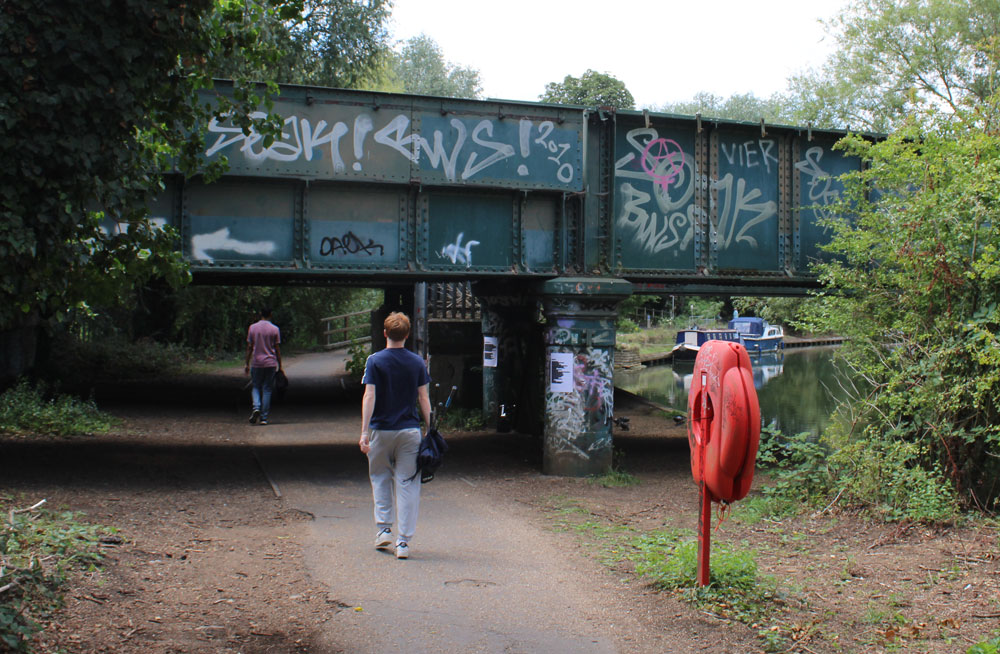
(2) The north–south Gas Company Railway Bridge of 1886: the Isis Bridge
Now used as a second bridge by Network Rail
This was built extremely near the above GWR bridge to carry Gas Company trains in one direction only (from the north to the south side of the river):
On 1 May 1886 this notice was published in Jackson's Oxford Journal:
The Directors of the Oxford Gas Light and Coke Company are prepared to receive TENDERS for the Construction of a short Branch Railway to connect their Gas Works with the Great Western Railway. The Contract will include an Embankment, the Abutments for a Bridge over the River Thames, a Timber Gauntry, the Permanent Way, and other work....
This railway spur connecting the Great Western Railway station on the Botley Road to the retort house in the North Works was built later that year, together with this gas company bridge (the Isis Bridge) beside the GWR mainline railway bridge to extend the line to the South Works. On 16 October 1886 Jackson's Oxford Journal reported on the building of this bridge, which cost £300,000 and was designed by Henry Marc Brunel and John Woolfe Barry:
The inconvenience and expense of carting coal through the streets from the Railway Station to the Gas Works has long been felt, and the present undertaking will provide a saving to the ratepayers of the City, and the roads will be relieved of their heavy traffic. An embankment is being made on the south side of the river near Boney's Bridge, and an iron and steel bridge will be carried across, the rails for conveying the trucks of coal going direct into the retort house on a timber gantry with three turntables, weigh bridge, &c.
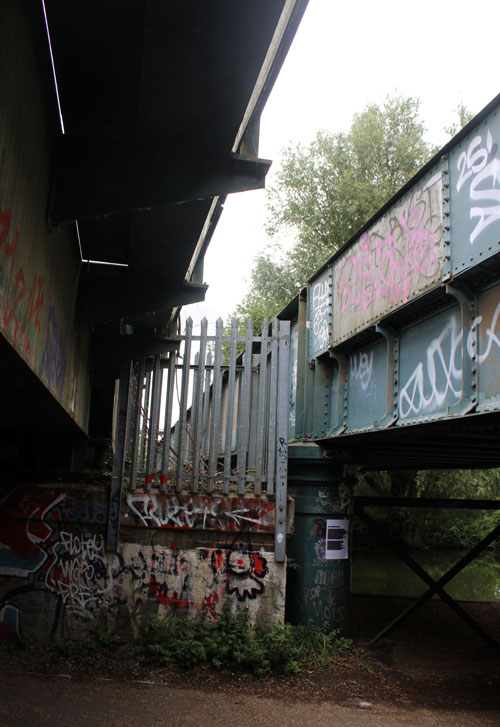
Right: This photograph shows how close the
Gasworks Bridge of 1884 on the right was built
to the main GWR railway bridge on the leftToday both adjacent bridges are used by Network Rail
to carry trains between Oxford and Didcot and they
are known as the River Isis Crossing.
A second bridge had to be built by the Gas Company so that after the line had curved eastwards through the gasworks it crossed the river back to the other side. It would not have been possible for trains to travel in two directions on one bridge without demolishing a number of houses in St Ebbe's.
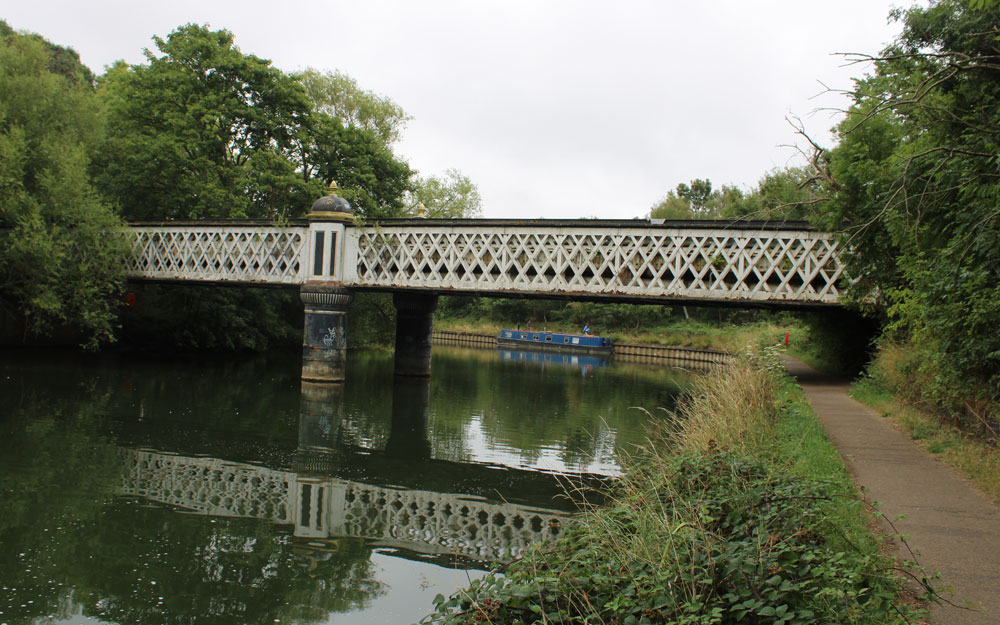
(3) The south–north Gas Company Railway Bridge of 1886
Now a footbridge
In 1886 the gas company built this second railway bridge across the river in two spans. This bridge carried gasworks trains from the south to the north side of the river and is shown below in August 1920 in a photograph by Henry Taunt (Historic England HT12249):
The photograph below taken by Taunt in 1886 shows this Gasworks bridge being installed (Historic England HHT00140):
This Gasworks Bridge had a single track of rails, and beside them was a cart road on which horses pulled coal wagons. Beneath the cart road were five rows of gas mains, 18 inches in diameter,
It was designed by Thomas Hawkesley and built by Vernon & Co. It is in two spans.
- Article about this Gasworks Bridge entitled “Osney Footbridge”
It is now a pedestrian bridge, shown below in July 2025:
(4) The Gasworks Foot Bridge or “Pipe Bridge” of 1927 (now a footbridge)
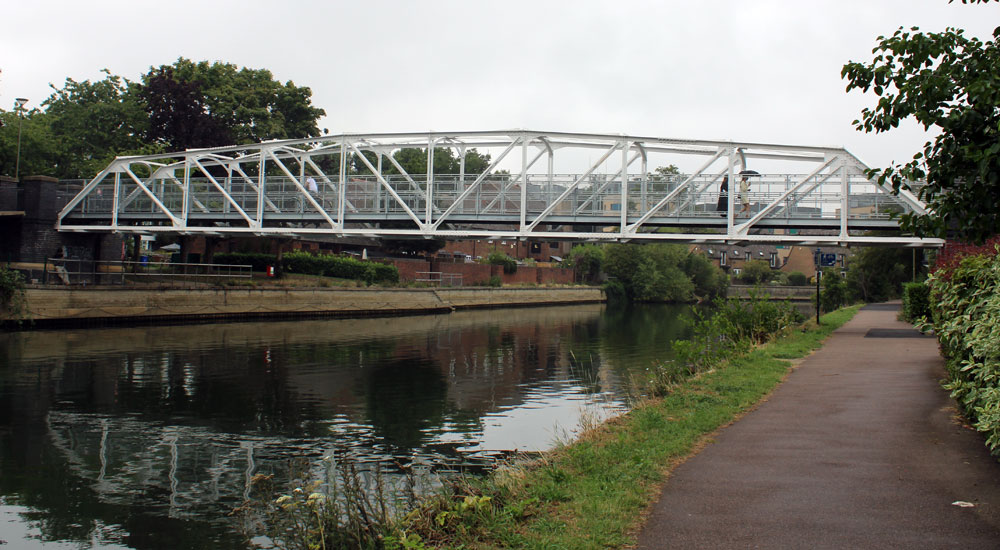
In 1925 new works were built and for the first time gas was made on the south bank of the river. In 1927 a second bridge not far to the east of the railway bridge was built to enable workers to walk across from St Ebbe's to the new South Works. This bridge also carried two large gas pipes, hence its name.
It was restored in 2024/5 and new information boards have been added.
Gas street lamps
In 1819 the gas lamps of Oxford were lit from sunset to sunrise, except during the three summer months. In 1833 there were 225 gas lamps in the then much smaller city. In 1931 out of the two thousand street lamps in Oxford, only a hundred were electric; and even as late as 1963 there were 1,820 gas lamps and 3,260 electric.
The end of the Oxford gas works
In 1948 the South Midland Gas Corporation (as it was then known) applied to enlarge the works, but this was opposed by both City and University. The company was nationalized in 1948 and became known as the Southern Gas Board.
In 1952 the Southern Gas Board agreed to vacate the St Ebbe’s site in return for £250,000 compensation. The works were closed in 1960, and the last two gasholders were demolished in 1968. Gas was then supplied to Oxford from Reading and Southampton until the advent of natural gas in 1970.
The South Works site is now a nature reserve, and part of the Friars Wharf housing estate was built on some of the earlier North Works site. The railway bridge and the pipe bridge are now both used as footbridges.